April 9, 2026: Internet restored
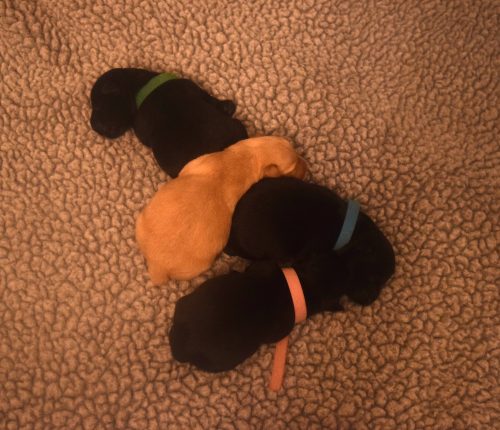
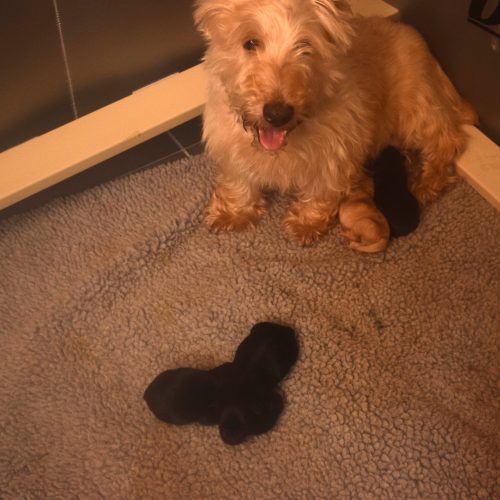
I am back online. I don’t have to watch tv on my phone anymore. Fiona’s puppies are really growing. She is such a good mom. They are one and a half weeks old now. Collars have been loosened to adjust to their growth. I am going to add a black collar on the wheaten this evening, so she will be used to a collar around her neck. When they are around three weeks old, I will put real collars on them. They will be the same color as the Velcro ones. The black female will have a pink and black collar.
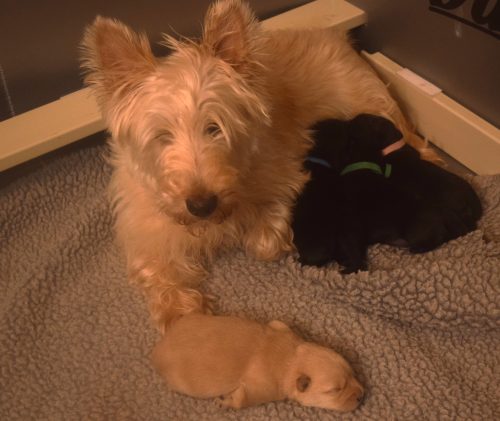
Lady Greer and Raven are getting bigger.
April 5, 2026: Update
The power cord to my modem broke apart, so I am out of access to internet and TV. A new modem will be coming in two to three days. If you have any questions or concerns, I can use my phone to access my email messages. I just won’t be able to post pictures. Puppies will be a week old on Monday.
April 3, 2026: Fiona’s puppies
Happy Easter (Passover). Praise God that Jesus resurrected for us.
Fiona’s puppies had their dewclaws removed today. They took it well.
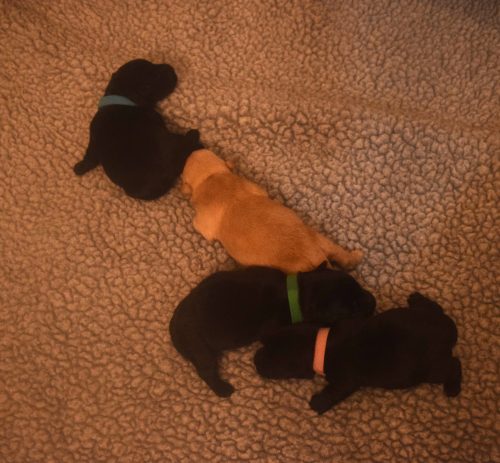
Lady Greer is eating puppy food now to get her weight up. Raven inhales her food. I will switch her to puppy food next week.
April 1, 2026: Happy Birthdays and Fiona’s puppies
Happy Birthday to the following Sandhills Scotties:
Merlin: April 1, 2025
Hannah April 14, 2015
Fiona and puppies are doing well. I have added Velcro collars.